
Quick answer: to succeed at a conference, set clear goals, understand your audience and create a stand with one strong message. Choose useful promotional products that support your campaign, prepare your team to have meaningful conversations and make lead capture simple. Promote your attendance before the event, then follow up with qualified leads within one or two business days. Success should be measured by outcomes such as meetings booked, opportunities created and sales generated – not just stand traffic or merchandise handed out.
Conferences can be a major investment for your brand. Between exhibition fees, travel, staffing and displays the costs can add up quickly.
Yet many businesses arrive with no clear objective beyond “getting our name out there”.
A successful conference requires more than an attractive stand and a bowl of promotional pens. It needs a clear strategy for attracting the right people, creating meaningful conversations and staying memorable long after the event ends.
Whether you are exhibiting at an industry conference, trade show or business expo, these practical conference tips will help you get more value from every interaction.

What Makes a Conference Successful?
A successful conference is one where your team achieves a defined business outcome.
That outcome might include:
- Generating qualified sales leads
- Booking meetings with prospective clients
- Strengthening existing customer relationships
- Launching a new product or service
- Increasing brand awareness within a specific industry
- Building partnerships or recruitment opportunities
- Collecting useful customer insights
The more specific the objective, the easier it becomes to plan your stand, messaging, merchandise and follow-up strategy.
Rather than measuring success by the number of visitors or promotional products handed out, focus on what happened as a result.

1/ Set Clear Conference Objectives
Before ordering displays or choosing merchandise, decide what success should look like.
Ask:
- Who do we want to meet?
- What action do we want visitors to take?
- What does our team need to communicate?
- How will we capture contact information?
- How will we measure the return on investment?
For example, a conference objective could be:
Generate 50 qualified leads from Australian marketing managers and book at least 10 follow-up meetings within two weeks.
This is much stronger than simply aiming to “increase awareness”.
Clear goals also help your team prioritise quality conversations over collecting as many business cards as possible.

2/ Understand Your Conference Audience
The best conference experiences are designed around the attendee, not the exhibitor.
Research who is likely to attend and consider:
- Their roles and responsibilities
- Their most common problems
- What they are trying to learn
- Which products or services are relevant to them
- What would encourage them to stop at your stand
- What information or merchandise would be genuinely useful
A finance conference, construction expo and university event will each require a different approach.
Your messaging, products and conversations should reflect the specific audience rather than relying on a generic exhibition formula.

3/ Create One Clear Stand Message
Conference attendees are exposed to hundreds of logos, displays and sales messages. Your stand needs to communicate its value quickly.
A visitor should be able to understand three things within a few seconds:
- Who you help
- What you help them achieve
- Why they should speak with you
Keep signage simple and outcome-focused. Avoid filling your display with paragraphs of company information or long lists of services.
Instead of:
We provide innovative, end-to-end business solutions.
Try:
Reduce onboarding time by 40%.
The second message is specific, relevant and gives attendees a clear reason to learn more.
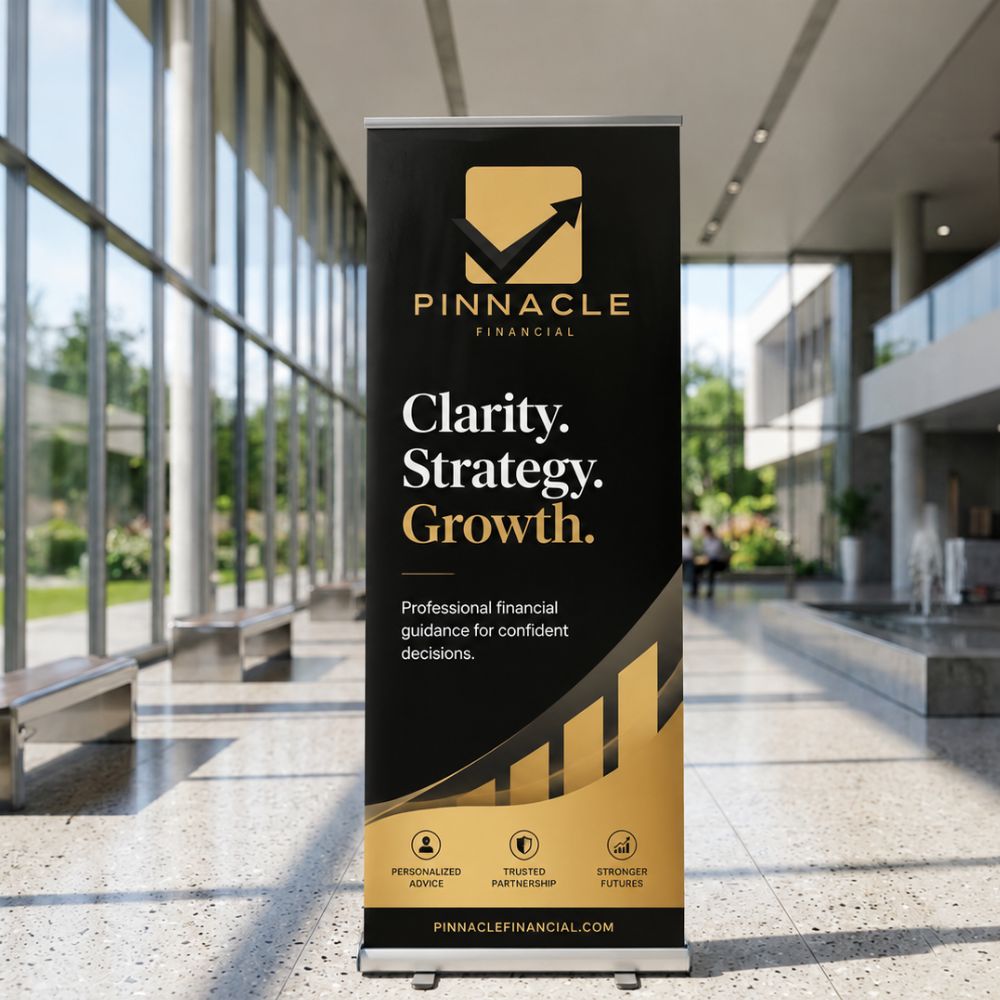
4/ Design an Inviting Exhibition Stand
Your stand should be open, approachable and easy to navigate.
Avoid creating physical barriers between your team and attendees. Large tables placed across the front of a stand can make conversations feel transactional and discourage people from entering.
A strong conference stand may include:
- Clear branding visible from a distance
- One central message
- Space for natural conversations
- A product demonstration or interactive element
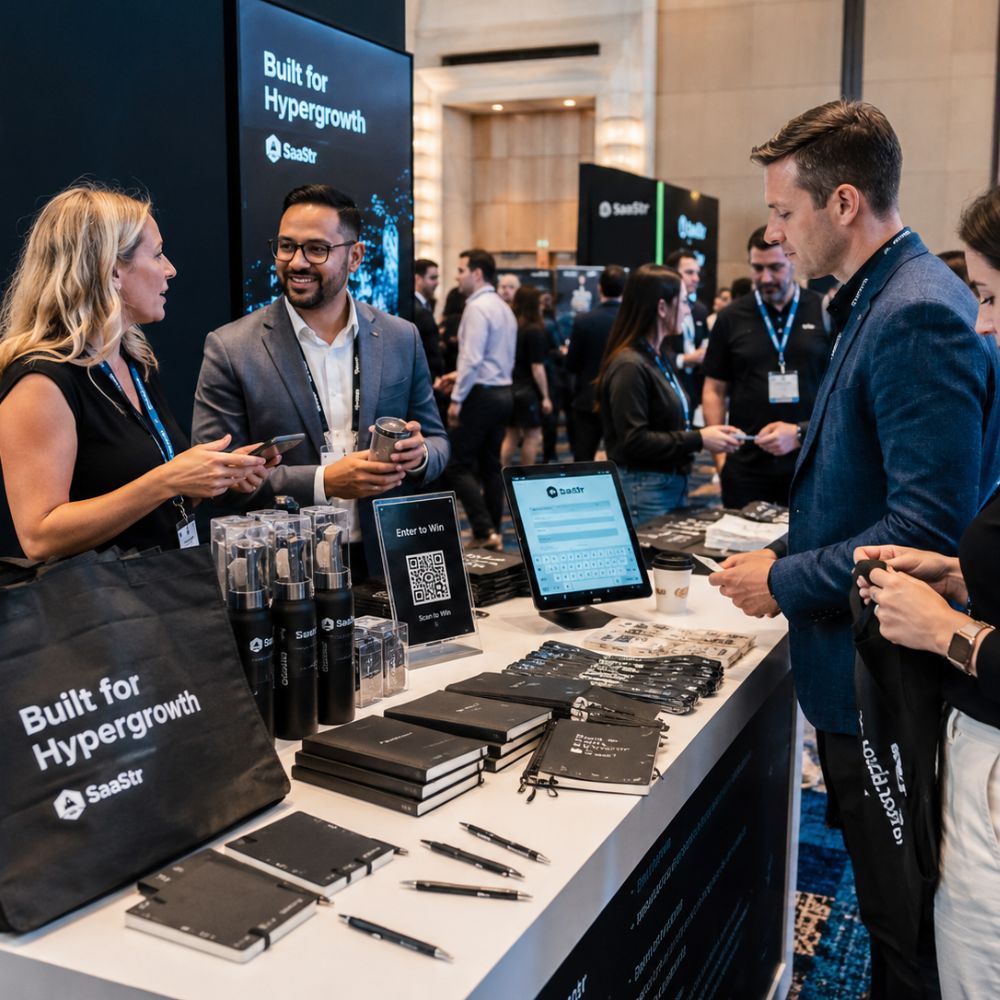
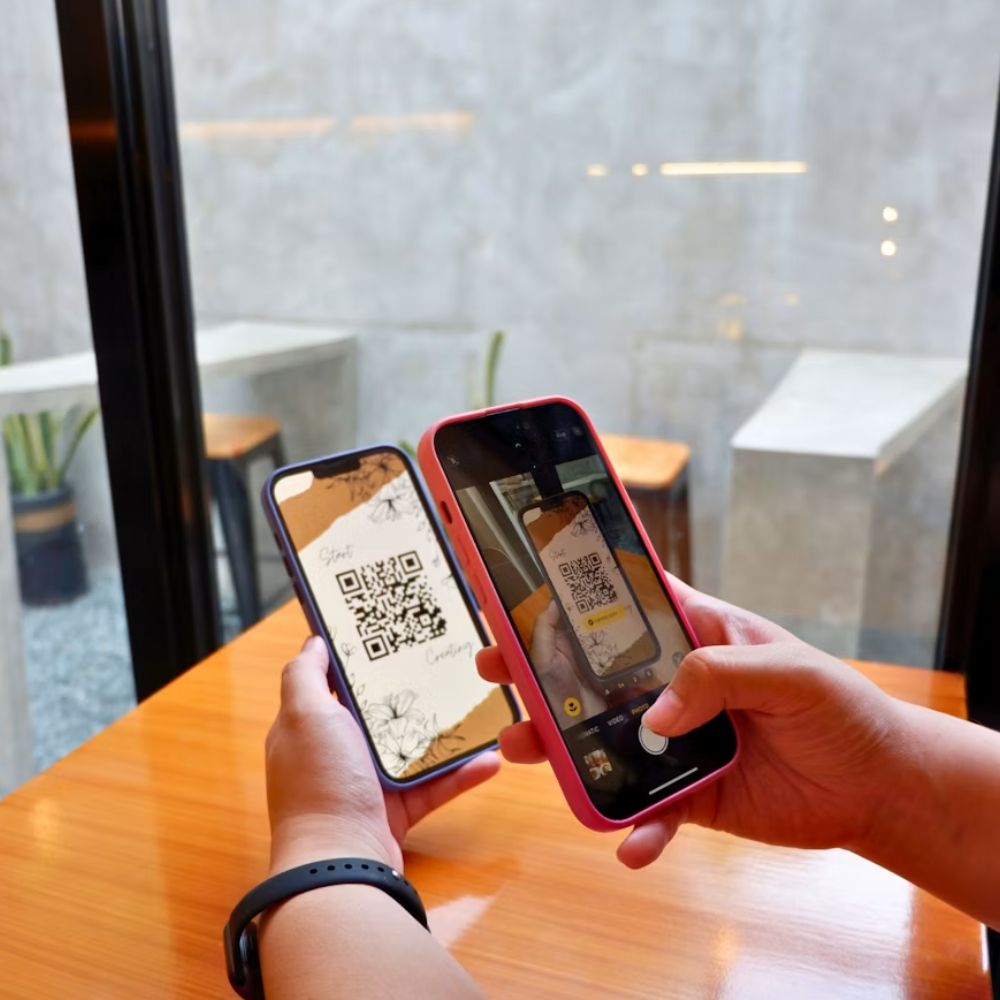
- Accessible information or QR codes
- Well-organised promotional merchandise
- Comfortable lighting and uncluttered surfaces
The stand should support the conversation, not compete with it.

5/ Choose Promotional Products With a Purpose
Promotional merchandise can be one of the most effective ways to extend your brand beyond the conference floor.
However, the product should support your objective and suit the audience.
Before choosing an item, consider:
- Who will receive it?
- Will they use it after the event?
- Does it relate to our message?
- Does the quality reflect our brand?
- Is it easy to transport?
- Can it encourage a follow-up action?
Popular conference merchandise includes:
- Branded notebooks
- Promotional pens
- Reusable drink bottles
- Coffee cups and tumblers
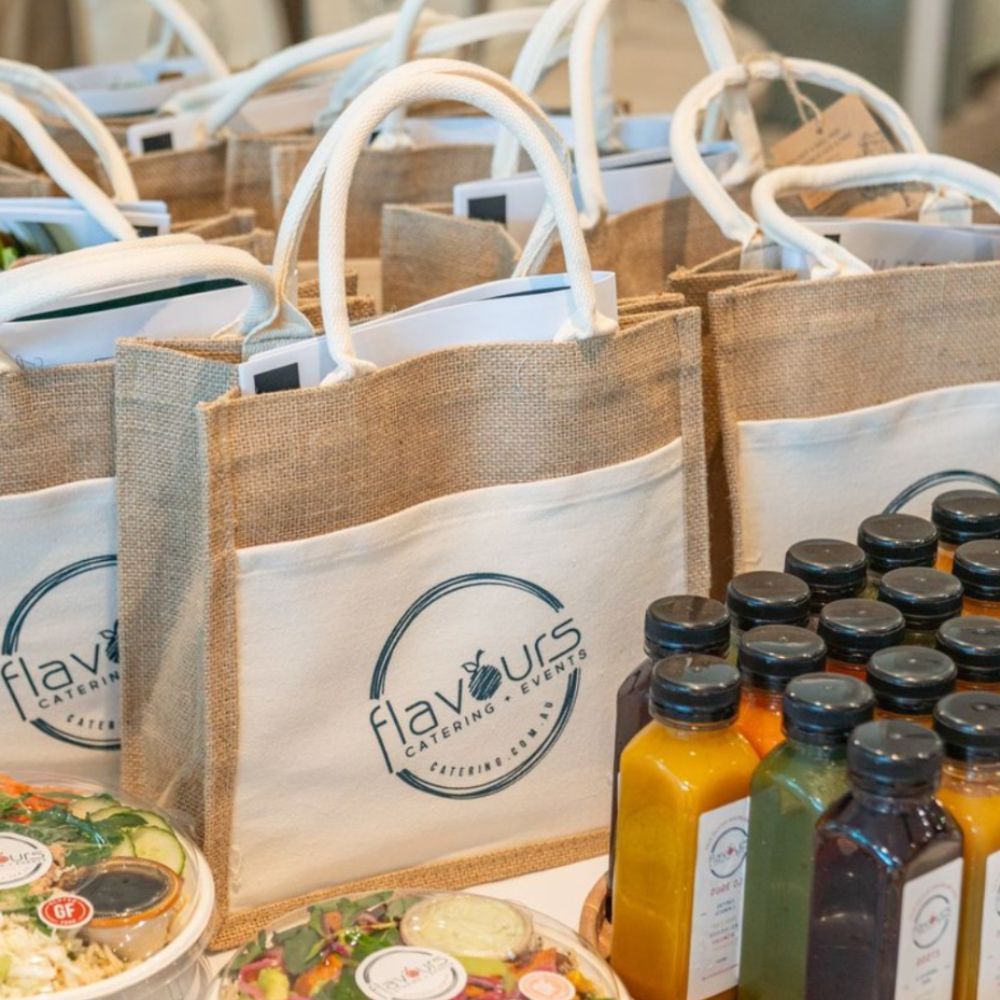
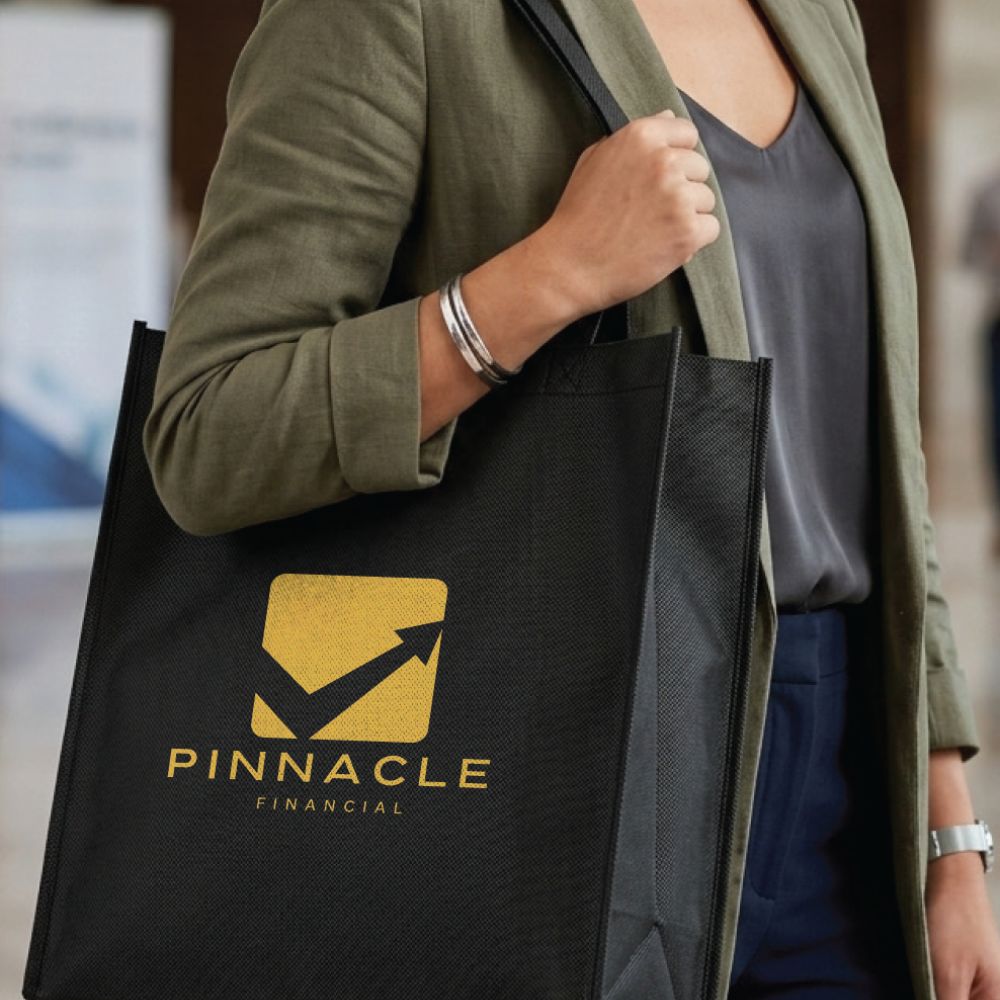
- Tote bags
- Tech products
- Caps & Headwear
- Desk products
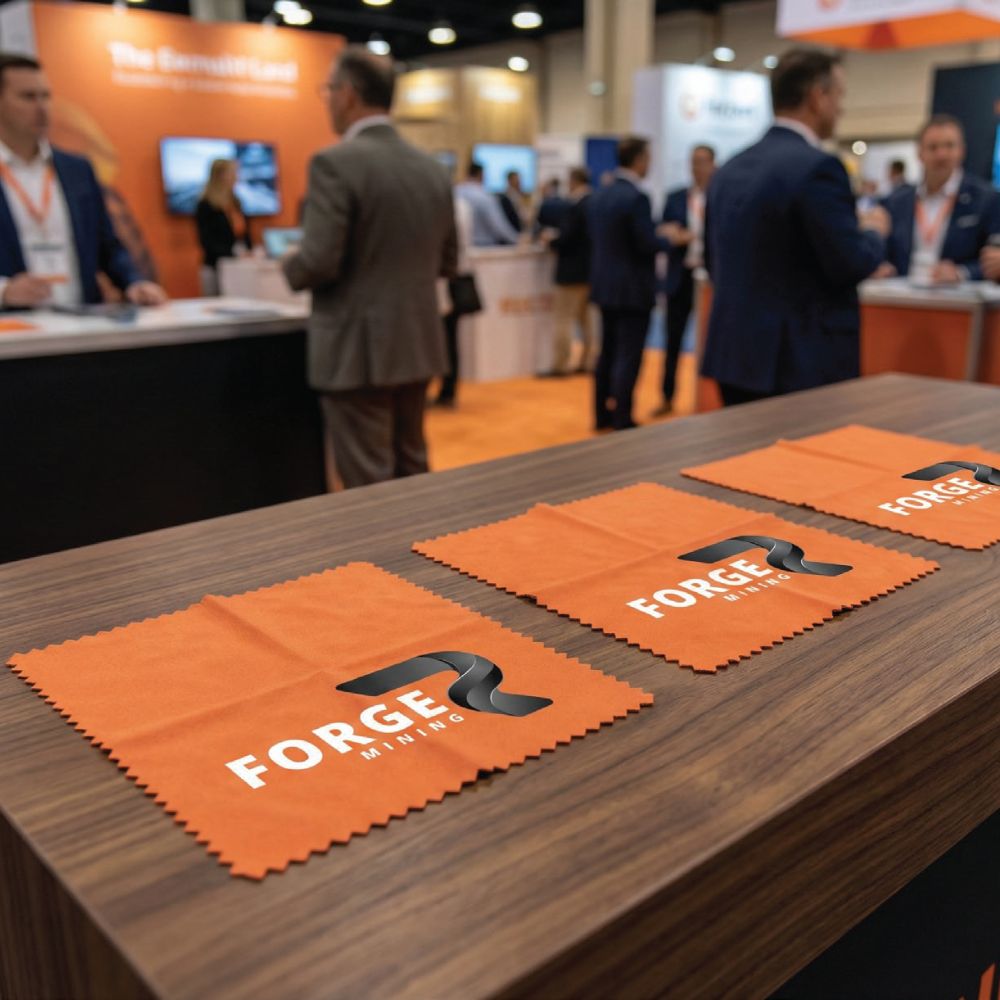
- Tablecloths & Throws
- Banners
- Flags & Marquees
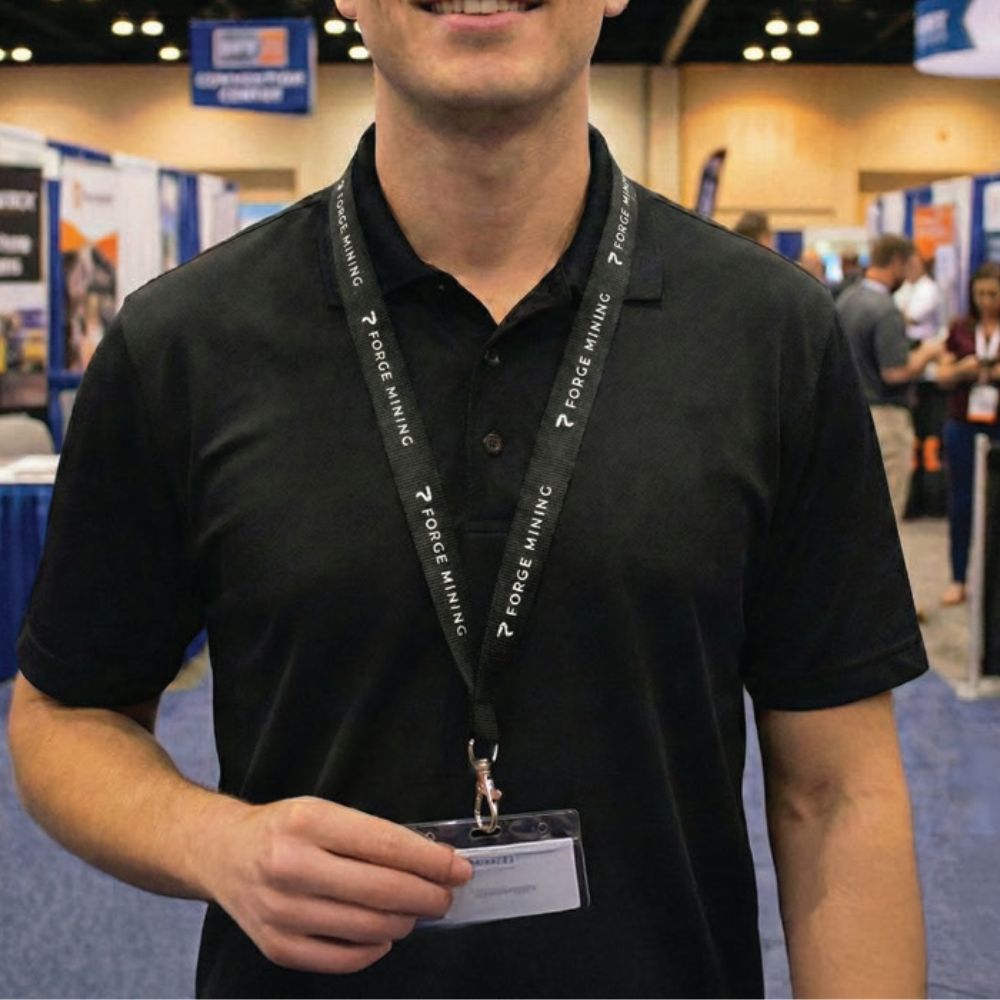
- Lanyards
The strongest conference products are relevant, useful and made to be kept.
A poorly chosen product may be forgotten within hours. A useful, well-branded item can remain in someone’s office, car or home for months or even years.
6/ Connect the Merchandise to Your Message
A logo builds brand recognition, but the right message can make merchandise more meaningful.
Consider adding:
- A campaign message
- A useful tip
- A memorable phrase
- A call to action
- A QR code linking to a conference resource
- A message connected to the product itself
For example, a technology company providing a branded cable organiser could use messaging around simplifying complexity.
A wellbeing organisation handing out drink bottles could connect the product to hydration, healthy habits or employee care.
This gives the merchandise a clear purpose rather than treating it as a generic giveaway.
7/ Use Different Merchandise for Different Visitors
Not every attendee needs to receive the same product. Segment your audiences.
A tiered merchandise strategy can help you manage your budget and create more valuable interactions.
General visitors
Use practical, affordable products for attendees who stop briefly or participate in an activity.
Qualified prospects
Provide a higher-value item to people who match your target audience and engage in a meaningful conversation.
Existing clients and key contacts
Prepare premium gifts for important customers, partners or pre-arranged meetings.
This approach allows you to invest more in the relationships that matter most without overspending on high-volume giveaways.
8/ Give People a Reason to Engage
Merchandise should support engagement rather than replace it.
Instead of leaving products unattended for anyone to collect, connect them to a simple activity or conversation.
You could:
- Run a product demonstration
- Offer a short consultation
- Create an interactive competition
- Ask attendees to answer an industry question
- Invite visitors to scan a QR code
- Provide a useful downloadable resource
- Personalise a product at the stand
- Exchange a premium item for a booked meeting
Avoid making the process unnecessarily complicated. The activity should feel valuable and enjoyable, not like a barrier designed to collect personal data.

9/ Prepare Your Conference Team
Even the best stand and merchandise cannot compensate for an unprepared team.
Before the event, brief everyone on:
- The conference objectives
- The ideal customer profile
- Key products or services to discuss
- Conversation starters
- Common customer questions
- Lead qualification criteria
- How contact details will be recorded
- When promotional products should be distributed
- Who is responsible for follow-up
Encourage the team to ask open questions rather than immediately launching into a sales pitch.
Useful conference conversation starters include:
- What brought you to the conference?
- What challenges are you currently working through?
- Which session has been most useful so far?
- How are you currently managing this area?
- What would make the biggest difference to your team?
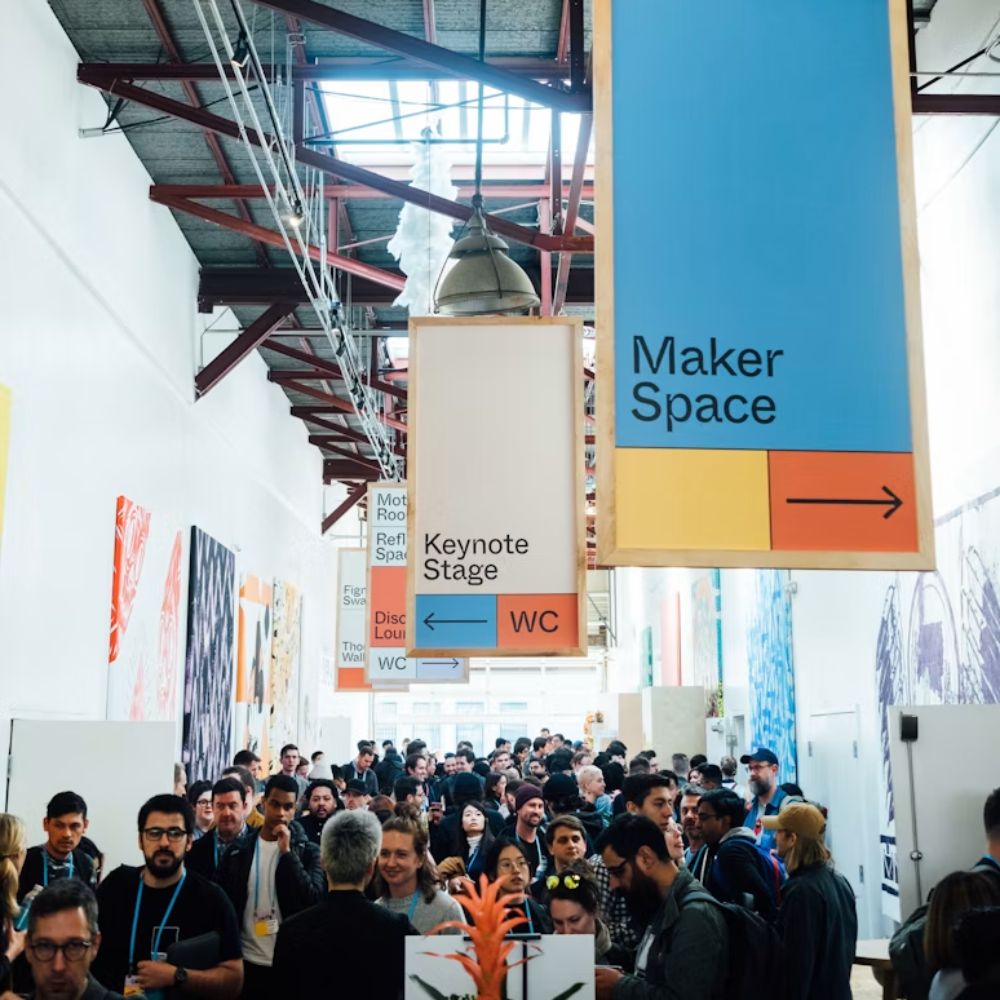
The aim is to understand the visitor before explaining what your company offers.
10/ Make Lead Capture Easy
Business cards and handwritten notes can easily become lost or disconnected from the original conversation.
Use a simple lead capture process that records:
- Name
- Company
- Contact details
- Role
- Area of interest
- Current need or challenge
- Buying timeframe
- Agreed next step
- Team member responsible for follow-up
Whenever possible, add leads directly to your CRM or use a form that integrates with your sales system.
Include enough context so the follow-up feels personal. “Met at conference” is not nearly as helpful as “Looking for a national onboarding merchandise program before October”.
11/ Promote Your Attendance Before the Event
Conference success begins before the doors open.
Let customers and prospects know where you will be and give them a reason to visit.
Promotion may include:
- Email invitations
- LinkedIn posts
- Personal outreach from account managers
- Website announcements
- Appointment booking links
- Speaker or session promotions
- Pre-event merchandise previews
Where possible, book meetings in advance. Scheduled conversations reduce your reliance on passing foot traffic and help ensure your highest-priority contacts receive dedicated time.
12/ Share Content During the Conference
Real-time content can extend the event beyond the people physically attending.
Consider sharing:
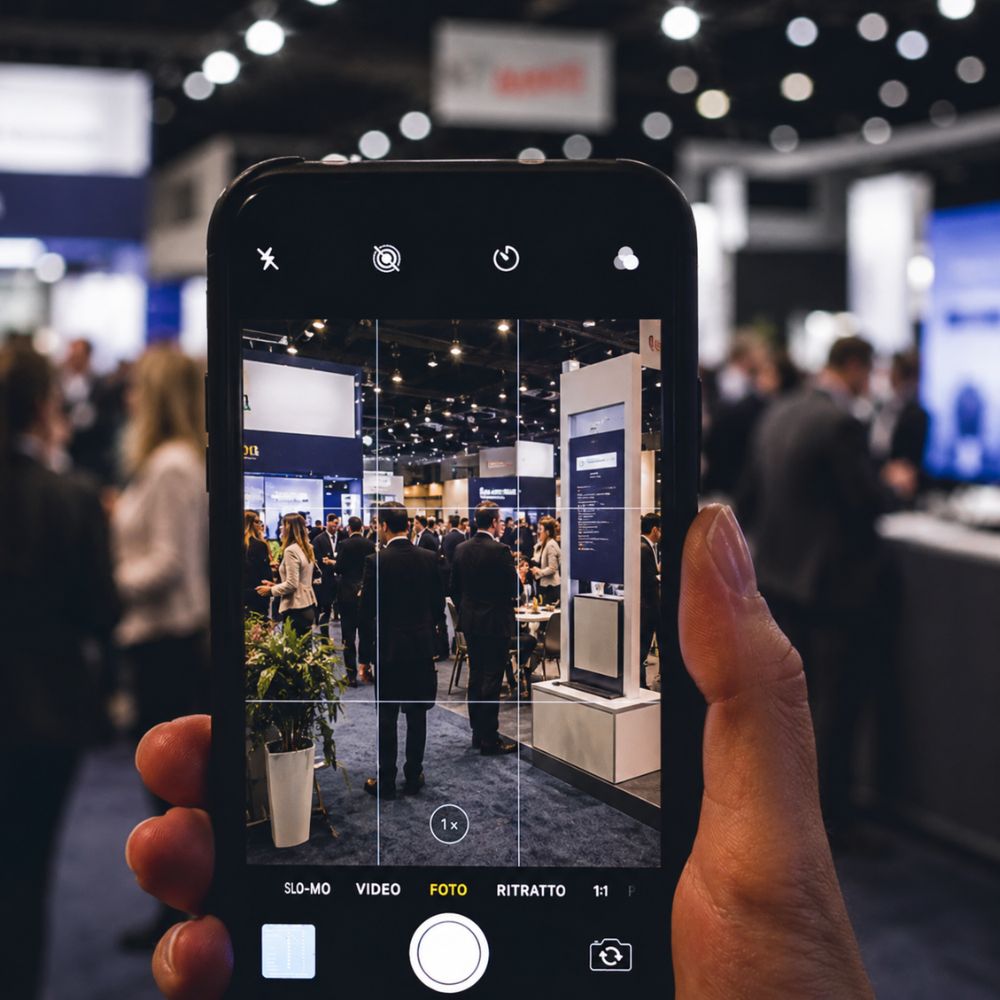
- Stand photos
- Product demonstrations
- Key insights from speakers
- Team updates
- Customer conversations, with permission
- Short videos
- Conference takeaways
- Behind-the-scenes moments
Focus on useful insights rather than publishing a continuous stream of promotional posts.
Tag the event and use its official hashtag where appropriate, but ensure the content still offers value to your broader audience.
13/ Follow Up Quickly and Personally
The conference does not end when the stand is packed away.
Timely follow-up is one of the biggest differences between a busy event and a commercially successful one.
Ideally, contact high-priority leads within one or two business days.
Reference the actual conversation and confirm the agreed next step.
For example:
It was great speaking with you about your employee onboarding program at the conference. As discussed, I have included a few merchandise ideas suited to new starters across multiple locations.
Avoid sending the same generic “thanks for visiting our stand” email to every person.
Segment contacts based on their needs, level of interest and next action. A qualified prospect who requested a quote should not receive the same follow-up as someone who entered a competition.

14/ Measure More Than Foot Traffic
Conference performance should be assessed against the original objectives.
Useful conference metrics include:
- Number of qualified leads
- Meetings booked
- Quotes requested
- Samples distributed
- New CRM contacts
- Follow-up response rate
- Opportunities created
- Sales generated
- Cost per qualified lead
- Revenue influenced
- Existing customer meetings
- Social media engagement
- Merchandise redemption or QR scans
Some conference opportunities take months to convert, so continue tracking leads beyond the week of the event.
15/ Review What Worked
Hold a short team debrief while the event is still fresh.
Discuss:
- Which messaging attracted attention?
- What questions did attendees ask?
- Which merchandise was most popular?
- Did the products attract the right audience?
- Which conversations were most valuable?
- What issues did the team encounter?
- Was the stand layout effective?
- Did the lead capture process work?
- What should be changed next time?
These insights can improve future conferences, marketing campaigns and even your wider product or service strategy.

Make Your Next Conference More Memorable
The most successful conference exhibitors do not simply hand out products or collect contact details.
They create a clear, relevant experience that makes it easier for the right people to start a conversation and remember the brand afterwards.
Promotion Products helps Australian organisations create conference merchandise that supports their audience, message and business objectives.
From branded giveaways and premium client gifts to custom merchandise, apparel, kitting and Australia-wide delivery, our team can help you plan the right products for your next conference.

Frequently Asked Questions

The Power of Referrals: How To Turn Customers Into Brand Advocates
Word of mouth is one of the most powerful ways to grow a business. A…

How to Choose the Right Staff Uniforms for Your Business
The right staff uniform should suit the employee’s role, working environment, climate and daily tasks…
Mastering a Conference: 15 Practical Tips for Exhibitor Success
Quick answer: to succeed at a conference, set clear goals, understand your audience and create…
How to Build a Successful Employee Milestone and Recognition Merchandise Program
Quick answer An employee milestone and recognition merch program is a planned system for gifting…

Employer Branding: How to Build a Strong Workplace Culture
A strong employer brand is not created by a polished careers page, a clever recruitment…
Best Promotional Products for Education, Schools and Universities
Whether you’re kitting out a school, running Orientation Week or building a merchandise range for…

Marketing Coordinator at Promotion Products. Eve holds a Bachelor’s Degree in Business and Marketing. She combines creativity and strategy to help brands make a lasting impression through thoughtful merchandise. Passionate about creating community through merch, storytelling and design, Eve oversees everything from campaign planning to content creation – championing merchandise as the powerful marketing medium it is.